Yash Johri, Research Assistant, ICS
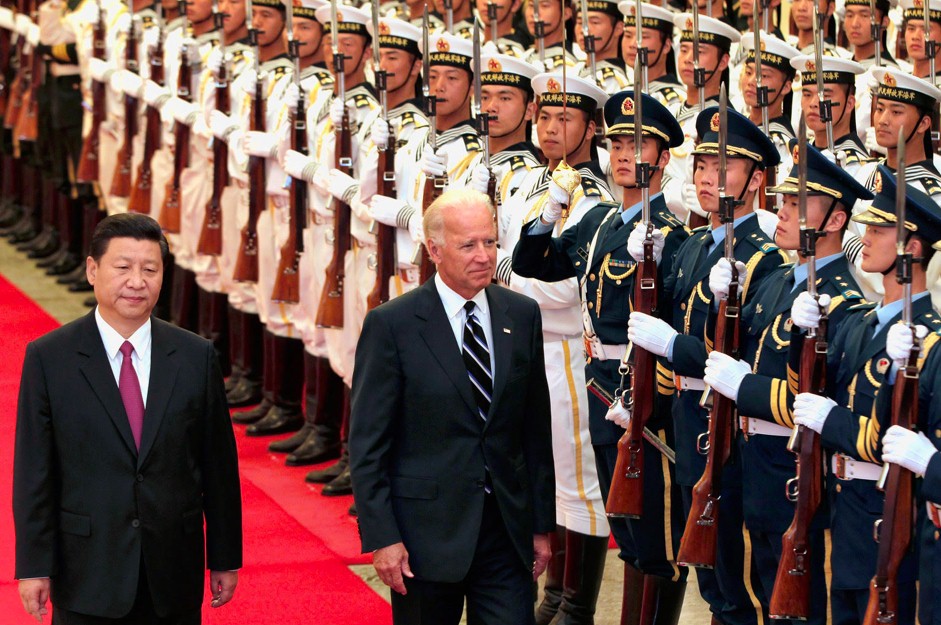
Biden foreign policy will focus on renewing the American position as the chief consensus builder and underwriter for a rule based international order. While this doesn’t portend a new beginning or a wiping of the slate, it does mean making an attempt to restore the effectiveness and trust enjoyed by world and regional institutions that helped the world prosper in the post World War Two phase as well as recommitting to and developing new methods to deal with multilateral problems such as that of climate change and technology governance. While the primary focus will undoubtedly be on healing the socio-economic divide at home we are likely to see a return of America projecting the values of democracy to the world as it has done in the past. All this will undoubtedly be in the face of the somewhat multipolar environment that has come to develop with an aggressive China and highly unequal and divided societies across the world.
The President-Elect in a conversation earlier this week with Thomas Friedman of the New York Times stated that he would not make any immediate moves to change Trump policy toward China, including on the Tariffs until he had conducted a full review of United States’ China Policy and consulted allies in the United States and Europe. Biden went on to state that it was required for America to create far greater leverage when it came to dealing with China, such leverage is to emerge from generating domestic and international consensus in their approach to the China challenge. While, only once the full spectrum China policy review concludes will observers be able to gauge the real direction of the administration on China, in the meantime, we can glean further into the thoughts and writings of persons the President-Elect is expected to involve in these consultations as principle stakeholders.
Anthony Blinken has been nominated by the President-Elect to serve as his Secretary of State. In the Obama administration, he served as Deputy National Security Advisor (2013-2015) and Deputy Secretary of State (2015-2017). In a conversation with Walter Mead organized by the Hudson Institute on the 9th of July, 2020, Blinken echoed his new boss’s aforementioned words that the United States relative to China had to regain a strategically advantageous position. While specifically stating that a lack of reciprocity in the Sino-US relationship was unsustainable, he stated that the United States needed to renew and strengthen its various alliances, re-engage with global institutions and re-commit to holding up its values. Given that the US’s erstwhile leadership position was receding, the situation was not only allowing China to act with impunity but also leading to a general world fragmentation. Blinken went on state that it was when the United States re-established this position of strength, only then would it be conducive to engage with the Chinese upon issues, which both nations share overlapping interests on such as Climate Change.
Jake Sullivan has been nominated by the President-Elect to serve as National Security Advisor. Sullivan in the past served as VP Biden’s National Security Advisor, as well as the Head of Policy Planning under Secretary of State, Hillary Clinton, at 43 he will become the youngest person to serve in this capacity since the Eisenhower Administration.
In an October 2019, Foreign Affairs piece titled ‘Competition Without Catastrophe’, Sullivan along with Kurt Campbell (Secretary Clinton’s Assistant for East Asia) while differentiating the Cold War from the US-China situation and arguing against similar containment strategies wrote, “…the goal should be to establish favorable terms of coexistence with Beijing in four key competitive domains – military, economic, political and global governance – thereby securing US interests without triggering the kind of threat perceptions that characterized the US-Soviet rivalry. Washington should heed the lessons of the Cold War while rejecting the idea that its logic still applies.” The piece further critiqued the National Security Strategy of 2018 by stating that the term ‘Strategic Competition’ contained in it reflects uncertainty about what the competition is over and what it means to win and further stated that the “starting point for the right US approach must be humility about the capacity of decisions made in Washington to determine the direction of long-term developments in Beijing. Rather than relying on assumptions about China’s trajectory, American strategy should be durable whatever the future brings for the Chinese system.”
The piece is a preliminary analysis dissecting the relationship from all angles, it urges a middle path between outright competition and a Chamberlain-like Grand Bargain. At the conclusion, Sullivan and Campbell echo Biden and Blinken that the United States can certainly not go it alone and needs to regain the confidence of its allies. More recently in May, 2020 Sullivan and Hal Brands have detailed in Foreign Policy, China’s two paths to power, one, a bottom up regional dominance narrative and the other a top down method by developing global political influence. An interesting and very detailed analysis that helps show the mirror to not only the American strategic community, but to all around the world dealing with the China challenge.
From Blinken and Sullivan’s views as well as President-Elect Biden’s recent statements, we can certainly expect a far more engaged United States. A running trope across the three views has been the need and desire to regain the United States’ strategic leverage across the world in order for it to not only secure its own economic position in the world but also to continue having a major say in setting the rules of post-pandemic world order. While the two aforementioned functionaries have so far been nominated, a recent Financial Times article states that Biden is expected to name China hawk Ely Ratner, Former Deputy NSA to a senior role as well as Kelly Magsamen to a prominent Asia role. Expect the Treasury Secretary nominee, Janet Yellen (erstwhile governor of the Federal Reserve, US Central Bank) to have a prominent say on China policy as well.
Professor Da Wei of Tsinghua University during an ICS Wednesday Seminar on the 29th of April was asked his preference between Biden and Trump, he replied that it didn’t matter who the principal was, what mattered greatly were the subject area policy makers. About Trump’s advisors he stated, “The team in DC running China policy are not mature enough, I think they are not stable or predictable…”. While 46’s advisors may put forth challenging propositions for Chinese persons like Da Wei to argue with, from their qualifications, past experience and Biden’s track record of trusting experts one can say that the management of the relationship will certainly be more predictable.
Виртуальный номер телефона актуальное решение для бизнеса
В условиях динамичной конкуренции и ускоренного развития технологий бизнес нуждается в эффективных инструментах для коммуникации с клиентами. Одним из таких иновативных инструментов является виртуальный номер телефона – многофункциональный ресурс, который уже заслужил признание в разных сферах бизнеса.
Что такое виртуальный номер телефона
Виртуальный номер телефона – это цифровой номер, который не привязан к конкретному физическому устройству, а работает через интернет или облачные технологии. Такой номер позволяет принимать звонки и сообщения в любой точке мира, что делает его универсальным средством для коммуникации.
Преимущества виртуального номера для бизнеса
1. Гибкость и мобильность
Виртуальный номер обеспечивает непрерывную связь с клиентами независимо от местоположения сотрудников. Это особенно важно для компаний с внеофисными командами и представителей, работающих в дороге.
2. Снижение затрат
Использование виртуальных номеров позволяет заметно уменьшить расходы на телефонную связь благодаря отсутствию необходимости в физическом оборудовании и возможности использования интернет-линии.
3. Гибкое управление звонками
Виртуальный номер поддерживает функции автоответчика, что повышает качество обслуживания клиентов и позволяет автоматизировать рабочие процессы.
4. Разнообразие форм коммуникации
Помимо звонков, виртуальные номера поддерживают sms-сообщения, что расширяет возможности взаимодействия с клиентами и партнерами.
Где применяются виртуальные номера
– Интернет-магазины и сервисы – для обеспечения быстрой связи и оперативной поддержки покупателей.
– Многофилиальные компании – для централизованного контроля звонков от разных офисов и филиалов.
– Малый и средний бизнес – для создания профессионального имиджа с минимальными затратами.
– Фрилансеры и консультанты – для разделения личной и рабочей коммуникации с клиентами.
Как выбрать виртуальный номер
При выборе виртуального номера важно учитывать такие факторы, как:
– Региональная принадлежность номера (местный, междугородний или международный) [url=https://www.06236.com.ua/list/528637]https://www.06236.com.ua/list/528637[/url]
– Поддерживаемые функции (переадресация, голосовая почта, sms)
– Удобство интеграции с CRM и другими бизнес-системами
– Уровень безопасности и защиты данных
– Стоимость подключения и ежемесячной оплаты
Заключение
Виртуальный номер телефона – это необходимое средство для современного бизнеса, позволяющее повысить уровень коммуникаций и снизить издержки. Он подходит для компаний любого масштаба и сферы деятельности, гарантируя гибкость, удобство и надежность связи с клиентами и партнерами.
Использование виртуальных номеров – это стратегия к совершенствованию бизнес-процессов и достижению новых высот в конкурентной среде.
Виртуальный номер телефона актуальное решение для бизнеса
В условиях быстрой конкуренции и активного развития технологий бизнес нуждается в эффективных средствах для коммуникации с клиентами. Одним из таких перспективных инструментов является виртуальный номер телефона – многофункциональный ресурс, который уже заслужил признание в разных сферах бизнеса.
Что такое виртуальный номер телефона
Виртуальный номер телефона – это электронный номер, который не привязан к конкретному физическому оборудованию, а работает через интернет или облачные технологии. Такой номер позволяет принимать звонки и сообщения в любой точке мира, что делает его универсальным средством для коммуникации.
Преимущества виртуального номера для бизнеса
1. Гибкость и мобильность
Виртуальный номер обеспечивает непрерывную связь с клиентами независимо от местоположения сотрудников. Это особенно важно для компаний с внеофисными командами и представителей, работающих в дороге.
2. Снижение затрат
Использование виртуальных номеров позволяет существенно уменьшить расходы на телефонную связь благодаря отсутствию необходимости в физическом оборудовании и возможности использования интернет-линии.
3. Гибкое управление звонками
Виртуальный номер поддерживает функции голосовой почты, что повышает качество обслуживания клиентов и позволяет улучшить рабочие процессы.
4. Разнообразие форм коммуникации
Помимо звонков, виртуальные номера поддерживают текстовые уведомления, что расширяет возможности взаимодействия с клиентами и партнерами.
Где применяются виртуальные номера
– Интернет-магазины и сервисы – для обеспечения быстрой связи и оперативной поддержки покупателей.
– Многофилиальные компании – для централизованного контроля звонков от разных офисов и филиалов.
– Малый и средний бизнес – для создания профессионального имиджа с минимальными затратами.
– Фрилансеры и консультанты – для разделения личной и рабочей коммуникации с клиентами.
Как выбрать виртуальный номер
При выборе виртуального номера важно учитывать такие критерии, как:
– Региональная принадлежность номера (местный, междугородний или международный) [url=https://all.eu.com/dlya-kakogo-biznesa-ispolzovanie-virtualnogo-nomera-mozhet-byt-vygodno.html]https://all.eu.com/dlya-kakogo-biznesa-ispolzovanie-virtualnogo-nomera-mozhet-byt-vygodno.html[/url]
– Поддерживаемые функции (переадресация, голосовая почта, sms)
– Удобство интеграции с CRM и другими бизнес-системами
– Уровень безопасности и защиты данных
– Стоимость подключения и ежемесячной оплаты
Заключение
Виртуальный номер телефона – это перспективное инструмент для современного бизнеса, позволяющее повысить уровень коммуникаций и снизить издержки. Он подходит для компаний любого масштаба и сферы деятельности, гарантируя гибкость, удобство и надежность связи с клиентами и партнерами.
Использование виртуальных номеров – это стратегия к совершенствованию бизнес-процессов и достижению новых успехов в конкурентной среде.