Bihu Chamadia, Research Intern, ICS
China announced a nationwide lockdown on January 23 to combat the Coronavirus outbreak. As soon as there was a visible decline in the number of reported cases of COVID-19 in China, the rules of lockdown were eased and many government offices started to function normally. While China tries to pull itself out of the pandemic, there has been another outbreak in the country: the rising cases of divorces.
After the government started lifting the lockdown in late February, marriage registration offices of various districts started receiving high number of divorce cases. The offices of many districts in Xi’an city of Shaanxi province received a record number of divorce cases. According to local Chinese sources, the incoming divorce cases in the marriage registration office in Yanta district in the city of Xi’an had surged to the point where the marriage registration office did not have vacancy till 18 March this year. The situation was similar in other parts of China including Beijing, Shanghai, Yunnan and Sichuan.
Even though an increase in divorce cases is a common trend in China after the Spring Break, according to a report in Global Times, compared to the same period last year, there has been a surge in the number of divorce cases this year. In Tongzhou district in Sichuan Province, the Civil Affairs office received 232 cases from late February till end March, while the number of divorce cases registered last year during the same period was 180.
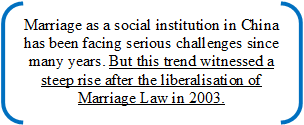
Marriage as a social institution in China has been facing serious challenges since many years. According to the Ministry of Civil Affairs, there has been a significant hike in the rate of divorce since the reform and opening up era. But this trend witnessed a steep rise after the liberalisation of Marriage Law in 2003. Once considered a taboo, even the number of divorce cases doubled in the past one decade. In 2010, the total number of divorces in China stood at 1.96 million which has more than doubled recently. Recent figures mentioned by Ministry of Civil Affairs, shows that it stood at more than 4 million in 2019.
The closing down of factories during the lockdown which had led to the laying off of workers and a dip in household income, was one of the primary factors that contributed to rising tensions between married couples during this period. Moreover, the gendered nature of household chores, where it was socially accepted that men who worked outside the household did not have time to lend a helping hand for household chores, was effectively busted during the lockdown when work happened from home; household work was still managed by the female partner during the lockdown. Women had to shoulder the entire burden of household duties including grocery-shopping and taking care of children with little to no help from her male counterpart. While these issues existed earlier, the lockdown period witnessed an overlapping of mental pressure along with problems such as inequality, gendering in roles and stereotyping of work which eventually accelerated divorce cases after the lockdown was lifted.
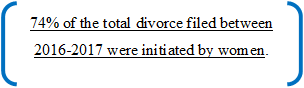
Infidelity was another major reason for divorce among married couples. The changes in the Marriage Law in 2003 allowed wives the right to divorce if the husband was abusive or had an extramarital affair. Many cases of infidelity were uncovered during the lockdown which otherwise would have remained under the veil during normal conditions. According to a 2016 report in Global Times, on an average 75% of the divorce cases filed are due to infidelity. In a speech made of 6 November 2019, Zhou Qiang, the Chief Justice of China’s Supreme People’s Court mentioned 74% of the total divorce filed between 2016-2017, were initiated by women.
While issues such as infidelity, financial issues and non-sharing of household burden have been the most common reasons for divorce in China, the lockdown aggravated these issues and exacerbated tensions between couples, and even led to a spike in cases of domestic violence. Divorce lawyers, in particular, have noted an increase in cases related to divorce and pointed that problems which would have earlier been a cause of little strife in the household were now leading to divorces due to an increase in interaction between couples during this period.
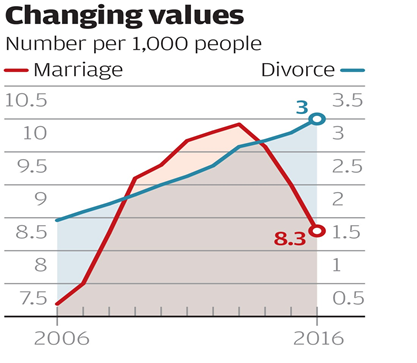
A combination of better socio-economic status leading to new aspirations, increasing tolerance among the masses towards divorce have influenced this trend. But most importantly, the liberalization of the marriage laws in 2003 played a significant role in the rise in divorce cases in China. Changes in the marriage laws in 1981 and 2001 led to a gradual increase in the number of divorce over the years but it was after the amendments in the Marriage Law in 2003 such as lower cost of filing divorce, faster pace of granting divorce and non-requirement of employer’s approval for filing a divorce which made it easier for women to seek divorce leading to the number of divorce in China rise exponentially after 2003 (see graph below).
Parallel to these developments was the rising average income of the female population in China since the reform and opening up. As average female income rose, the number of divorces also began rising. Earlier, job stability and owning a house were enough for a woman to ‘settle down’ but as women become increasingly educated and financially independent, their expectations also expanded. They no longer accepted to live in an abusive marriage or marriages where there was no compatibility. Moreover, while in the past, custody of the child was often given to the ex-husband after divorce and the wife was ostracized and faced difficulty finding a job – a major deterrence for women to seek divorce- this has changed today due to change in the level of income of women in China. Therefore, an already rising trend in the number of divorce cases witnessed an acceleration during the lockdown period when couples were forced to live together.
Although revoked, the demographic shifts caused by the One-Child policy is now causing a ripple effect both on China’s economy as well as the society. A rapidly ageing population and a fall in the average age of workforce have become a major concern for the central government as it grapples with lower birth rates and shortage in cheap labour. In 2019, China’s birth rate fell to its lowest in seven decades causing massive concern of the CCP. China’s population dwindles and the rate of marriage also goes down, the Chinese government fears that the number of workforce, taxpayers and consumers will also witness a steep fall.
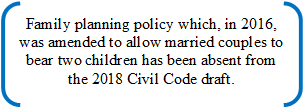
The growing concern of the government towards rising divorce cases is reflected in the measures taken to address to issue such as free counselling for couples and the introduction of a “cooling off” period to slow down the divorce rate. While earlier it was adopted only by a few local courts, recently, the 13th National People’s Congress that took place in May 2020, voted in favour of adopting ‘cooling off’ as a part of China’s first ever Civil Code. This has caused a massive outrage among the Chinese population where the Party has been accused of abandoning progressive ideas of promoting gender equality. On the other hand, family planning policy which, in 2016, was amended to allow married couples to bear two children has been absent from the 2018 Civil Code draft. This has led to speculations of government further easing the restrictions on family planning or scrapping the bar altogether on the number of children a married couple could bear.
Despite government efforts to prevent any fissures in the institution, and its push to preserve “traditional values” for a stable and “harmonious society”, divorce cases in China continue to rise. The Covid pandemic has only acted as a catalyst that has unravelled the pre-existing fractures in the society and economy. Rising costs of social pension and shortage in supply of cheap labour have created a huge burden on the falling GDP of the country. As demographers warn that China’s population will begin to shrink in the next decade derailing China’s economy with far-reaching global impact, the need to preserve the institution of marriage has become even more important. The recent adoption of the Civil Code where marriage takes up considerable space in the text of the Code exhibit the gravity the case of rising divorces pose for Beijing.
Across the world of rapidly changing money and variable costs from time to time situations appear where you need to get financial support until your subsequent salary. In this context, a wages loan becomes one of the famous financial appliances. It is necessary to consider what kind of lending this is and how it can be useful.
1. Definition of Loan up to Salary
A loan up to salary is a short-term type of [url=https://nearmepaydayloans1.site/]payday loans[/url] provided to the borrower on the terms of repayment per day of receipt of his subsequent wages boards. Usually such loans have small amounts, and their purpose is to help the borrower to cope with temporary financial difficulties until the subsequent payment of salary.
2. Superiorities of a loan up to Wages
Urgency: Pre-salary loans usually are issued quickly, making them an pretty solution for those faced with unexpected expenses .
Ease of Obtaining: The process of design of such loans is as usual minimal. The borrower often needs provide only basic information and proof of measured income.
No Lending History: For many loans up to wages there is no needed verification of the credit history of the borrower, which is a big advantage those , who do not have excellent lending history.
3. Features of Repayment and Refinancing Rates
Repayment Term: Usually the loan term until salary composes several weeks or until next salary of the borrower.
Refinance Rates: The rates on such loans can be higher than long-term loans because they are provided on a short-term basis and frequently do not require collateral.
4. Safety and Regulation
Legality and Regulation: Fundamentally choose only reliable monetary organizations and legal lenders, since regulation in this area helps prevent negligent practices.
Safety of consumers: Laws and regulations ensure protection of consumers, including transparency of conditions of credit and provision of complete information about interest and fees.
5. Prudence and Candidates
Consideration of Alternatives: Before applying for a loan up to wages, it is worth considering alternative options, including borrowing from buddies or families, appeal to charitable organizations or consider other financial possibilities.
Reasonable Implementation: Mainly use credit before salary reasonably and responsibly, avoiding constant appeal for such loans and observing repayment deadlines.
Conclusion
A payday loan is a tool that possibly useful in situations of short-term monetary problems. However, it should be used with caution, observing repayment deadlines and electing reliable lenders. Remember that financial security is an important nuance of your personal card game, and smart financial planning will help avoid excessive financial problems.
In a world of of rapidly changing money and variable costs from time to time situations arise where you need to get financial support until your subsequent salary. In this context, a salary loan becomes one of the famous monetary tools. Let’s look at what kind of lending this is and how it can be useful.
1. Definition of Loan up to Wages
A loan up to salary is a short-term type of [url=https://nearmepaydayloans1.site/]loans[/url] provided to the borrower on the terms of repayment on the day of receipt of his next wages boards. Usually such loans have small amounts, and their purpose is to help the borrower to cope with temporary financial difficulties until the subsequent payment of wages.
2. Advantages of a loan up to Salary
Urgency: Pre-payday loans as usual are issued quickly, making them an pretty solution for those faced with unexpected expenses .
Ease of Obtaining: The process of design of such loans is usually small. The borrower often require provide only basic information and proof of measured income.
No Lending History: For many loans up to wages there is no needed verification of the credit history of the borrower, which is a big advantage for those , who do not have excellent credit history.
3. Features of Repayment and Interest Rates
Repayment Term: Usually the loan term until wages composes several weeks or until subsequent salary of the borrower.
Refinance Rates: The rates on such loans may be higher than long-term loans because they are provided on a short-term base and frequently do not require collateral.
4. Safety and Regulation
Legality and Regulation: Mainly choose only reliable financial organizations and legal lenders, since regulation here helps prevent unfair practices.
Safety of consumers: Laws and regulations provide protection of consumers, including transparency of conditions of credit and provision of complete information about interest and fees.
5. Prudence and Alternatives
Consideration of Alternatives: Before applying for a loan up to salary, it is worth considering other options, including borrowing from friends or families, appeal to charitable organizations or consider other monetary possibilities.
Wise Use: Mainly use credit before salary wise and responsibly, avoiding constant appeal for such loans and observing repayment deadlines.
Conclusion
A payday loan is a tool that possibly useful in situations of short-term financial difficulties. However, it should be used with caution, observing repayment deadlines and choosing reliable lenders. Remember that financial security is an important aspect of your personal card game, and smart financial planning will help avoid excessive financial difficulties.
Across the world of rapidly changing money and variable costs sometimes situations arise where you need to get financial support until your subsequent salary. In this context, a wages loan becomes one of the fashionable monetary appliances. It is necessary to consider what kind of lending this is and how it can be can be useful.
1. Definition of Loan up to Salary
A loan up to salary is a short-term type of [url=https://nearmepaydayloans1.site/]loans near me[/url] provided to the borrower subject to repayment on the day of receipt of his subsequent wages boards. As usual such loans have small amounts, and their purpose is to assist the borrower to cope with temporary financial difficulties until the subsequent payment of wages.
2. Superiorities of a loan up to Wages
Urgency: Pre-salary loans usually are issued quickly, making them an pretty solution for those faced with unexpected expenses .
Ease of Obtaining: The process of design of such loans is usually minimal. The borrower often require provide only basic information and confirmation of measured income.
No Lending History: For many loans up to salary there is no required verification of the lending history of the borrower, which is a big advantage for those , who do not have fair lending history.
3. Features of Repayment and Interest Rates
Repayment Term: Usually the loan term until salary is several weeks or until next wages of the borrower.
Refinance Rates: The rates on such loans can be higher than long-term loans because they are provided on a short-term base and frequently do not require collateral.
4. Safety and Regulation
Legality and Regulation: Important choose only reliable financial organizations and legitimate lenders, because regulation here helps prevent unfair practices.
Protection of consumers: Laws and regulations ensure protection of consumers, including transparency of criteria of credit and provision of complete information about interest and fees.
5. Prudence and Alternatives
Consideration of Alternatives: Before applying for a loan up to wages, it is worth inspecting alternative options, such as borrowing from friends or families, appeal to charitable organizations or consider other monetary possibilities.
Reasonable Use: Mainly use credit before salary wise and responsibly, avoiding constant application for such loans and observing repayment deadlines.
Conclusion
A payday loan is a tool that can be useful in situations of short-term financial problems. However, it should be used with caution, observing repayment deadlines and choosing reliable lenders. Remember that financial security is an important aspect of your personal card game, and smart financial planning will help avoid excessive financial difficulties.
In a world of of rapidly changing finance and variable costs from time to time situations arise where you need to get financial support until your subsequent salary. In this context, a salary loan becomes one of the favorite financial tools. It is necessary to consider is and how it can be can be useful.
1. Definition of Loan up to Salary
A loan up to wages is a short-term type of [url=https://nearmepaydayloans1.site/]loans[/url] provided to the borrower subject to repayment per day of receipt of his next wages boards. As usual such loans have small amounts, and their purpose is to help the borrower to cope with temporary financial difficulties until the subsequent payment of salary.
2. Advantages of a loan up to Salary
Urgency: Pre-salary loans usually are issued soon, making them an attractive solution for those faced with unexpected expenses .
Ease of Obtaining: The process of design of such loans is usually small. The borrower often needs provide only basic information and confirmation of stable income.
No Credit History: For many loans up to wages there is no needed verification of the credit history of the borrower, which is a big advantage for those , who do not have good lending history.
3. Features of Repayment and Interest Rates
Repayment Term: As usual the loan term until wages composes several weeks or until subsequent salary of the borrower.
Interest Rates: The rates on such loans may be higher than long-term loans since they are provided on a short-term basis and frequently do not require collateral.
4. Safety and Regulation
Legality and Regulation: Fundamentally choose only reliable financial organizations and legal lenders, since regulation here helps prevent negligent practices.
Safety of consumers: Laws and regulations provide protection of consumers, including transparency of conditions of credit and provision of complete information about interest and fees.
5. Caution and Candidates
Consideration of Alternatives: Before applying for a loan up to wages, it is worth considering other options, including borrowing from buddies or families, appeal to charitable organizations or consider other financial possibilities.
Reasonable Implementation: Mainly use credit before salary wise and responsibly, avoiding constant application for such loans and observing repayment deadlines.
Conclusion
A payday loan is a tool that possibly useful in situations of short-term financial difficulties. However, it should be used with caution, observing repayment deadlines and choosing reliable lenders. Remember that financial security is an important nuance of your personal cards, and smart financial planning will help avoid excessive financial difficulties.
Across the world of rapidly changing money and variable costs sometimes situations arise where you need to get financial support until your next salary. In this context, a salary loan becomes one of the favorite financial tools. It is necessary to consider what kind of lending this is and how it can be useful.
1. Definition of Loan up to Wages
A loan up to salary is a short-term type of [url=https://nearmepaydayloans1.site/]payday loans[/url] provided to the borrower on the terms of repayment on the day of receipt of his next salary. Usually such loans have small amounts, and their purpose is to assist the borrower to cope with temporary financial difficulties until the subsequent payment of salary.
2. Superiorities of a loan up to Salary
Urgency: Pre-payday loans as usual are issued quickly, making them an pretty solution for those faced with unexpected expenses .
Ease of Obtaining: The process of design of such loans is as usual small. The borrower often needs provide only basic information and proof of measured income.
No Lending History: For most loans up to wages there is no required verification of the lending history of the borrower, which is a big advantage for those , who do not have excellent credit history.
3. Features of Repayment and Interest Rates
Repayment Term: As usual the loan term until salary composes several weeks or until subsequent salary of the borrower.
Refinance Rates: The rates on such loans may be higher than long-term loans since they are provided on a short-term base and frequently do not require collateral.
4. Safety and Regulation
Legality and Regulation: Mainly choose only reliable financial organizations and legitimate lenders, since regulation in this area helps prevent unfair practices.
Safety of consumers: Laws and regulations provide protection of consumers, including transparency of conditions of credit and provision of complete information about interest and fees.
5. Caution and Alternatives
Consideration of Alternatives: Before applying for a loan up to salary, it is worth inspecting other options, such as borrowing from buddies or families, appeal to charitable organizations or consider other monetary possibilities.
Reasonable Implementation: Important use credit before wages reasonably and responsibly, avoiding constant appeal for such loans and observing repayment deadlines.
Conclusion
A payday loan is a tool that possibly useful in situations of short-term monetary difficulties. However, it should be used with caution, observing repayment deadlines and choosing reliable lenders. Remember that financial security is an important aspect of your personal card game, and smart financial planning will help avoid excessive financial problems.